Neighbors serving neighbors.
Protecting lives and property since 1896.
Bravery, Dedication, Community.
That’s the Weston Volunteer Fire & Rescue Department.
IN CASE OF EMERGENCY, CALL 911 IMMEDIATELY.
The Weston Volunteer Fire and Rescue Department provides fire protection and emergency response across 55 square miles in western Saunders County, Nebraska, including the village of Weston, Highway 79, and Highway 92. We also offer mutual aid to surrounding fire districts, ensuring comprehensive regional support.
One Mission:
Suppression is our business. Prevention is our goal.
-
The Weston Volunteer Fire and Rescue Department recruits and trains dedicated volunteers to provide dependable fire and emergency services to the Village of Weston, the Weston Rural Fire District, and our mutual aid partners. We respond to all types of emergencies with a focus on life safety, incident stabilization, property conservation, and proactive prevention, making our community a safer place to live, work, and play.
One Focus:
We all go out. We all come home. We thrive as one team.
-
Our strength starts and ends with our people. Well-trained, dedicated members are the foundation of any safe, effective fire department. Safety is our top priority because taking care of ourselves ensures we can take care of others. Every member matters, and the crew is only as strong as its training.
-
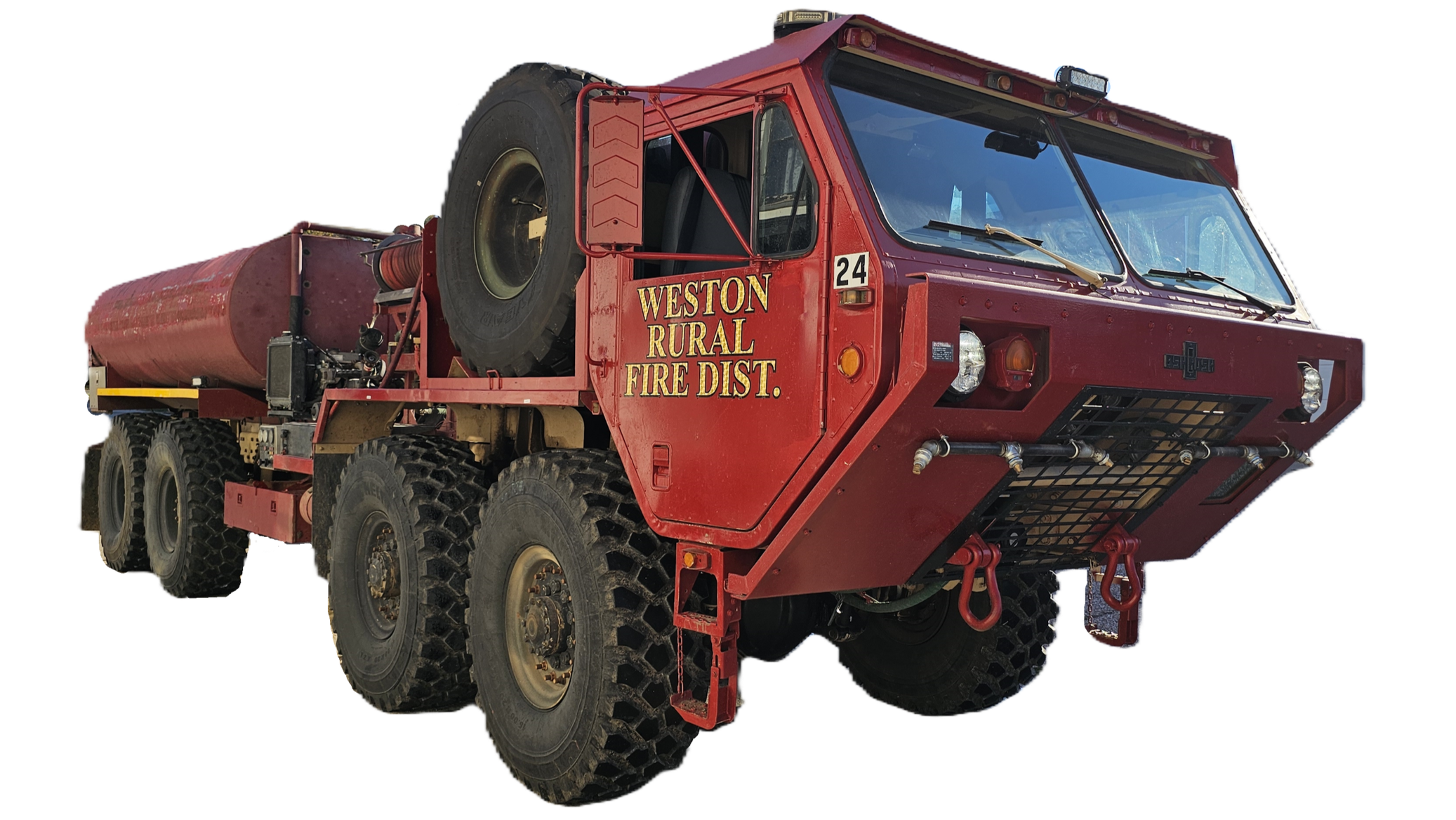
Unit 824 is a heavy-duty, all-terrain fire tanker originally built for military use and later acquired through the Forestry Service. With eight-wheel drive and a rugged design, it is well suited for rough terrain and off-road conditions.
This unit is primarily used to fight grass and wildland fires in areas that are difficult for standard fire engines to reach. Its durability and mobility make it a valuable resource for protecting rural areas and supporting large-scale vegetation fire response.
-
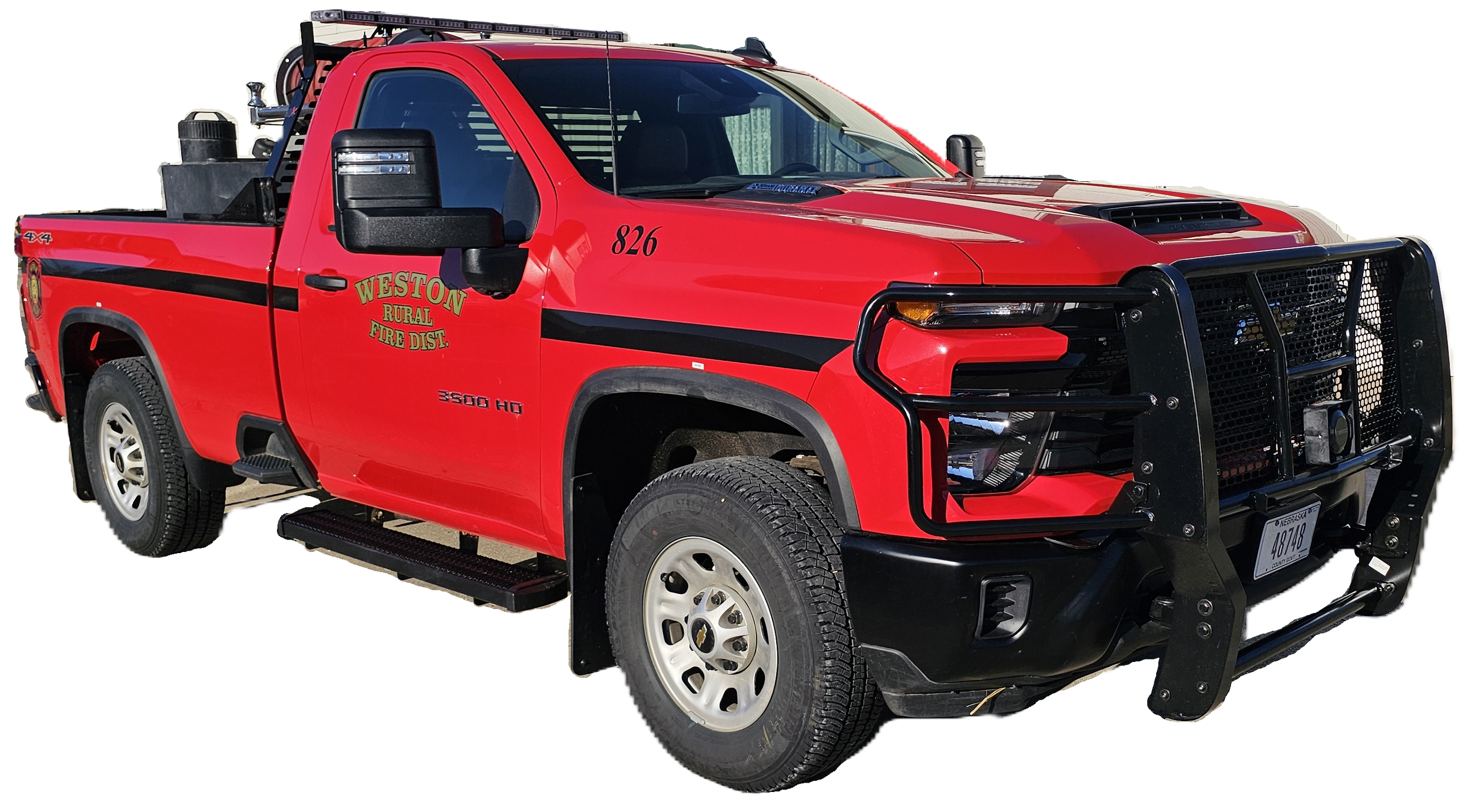
Units 826 and 827 are brush trucks built on 4x4 pickup truck chassis and designed to respond to grass and brush fires. Their off-road capability allows firefighters to access fields, woods, and rural areas where larger fire engines cannot safely travel.
These trucks can operate while moving, allowing crews to quickly contain fast-spreading vegetation fires. They can also be used for rapid response to vehicle fires, equipment fires, and small structure fires. While they resemble standard pickup trucks, they carry heavy fire fighting equipment and water, which affects handling and performance compared to a personal vehicle.
-
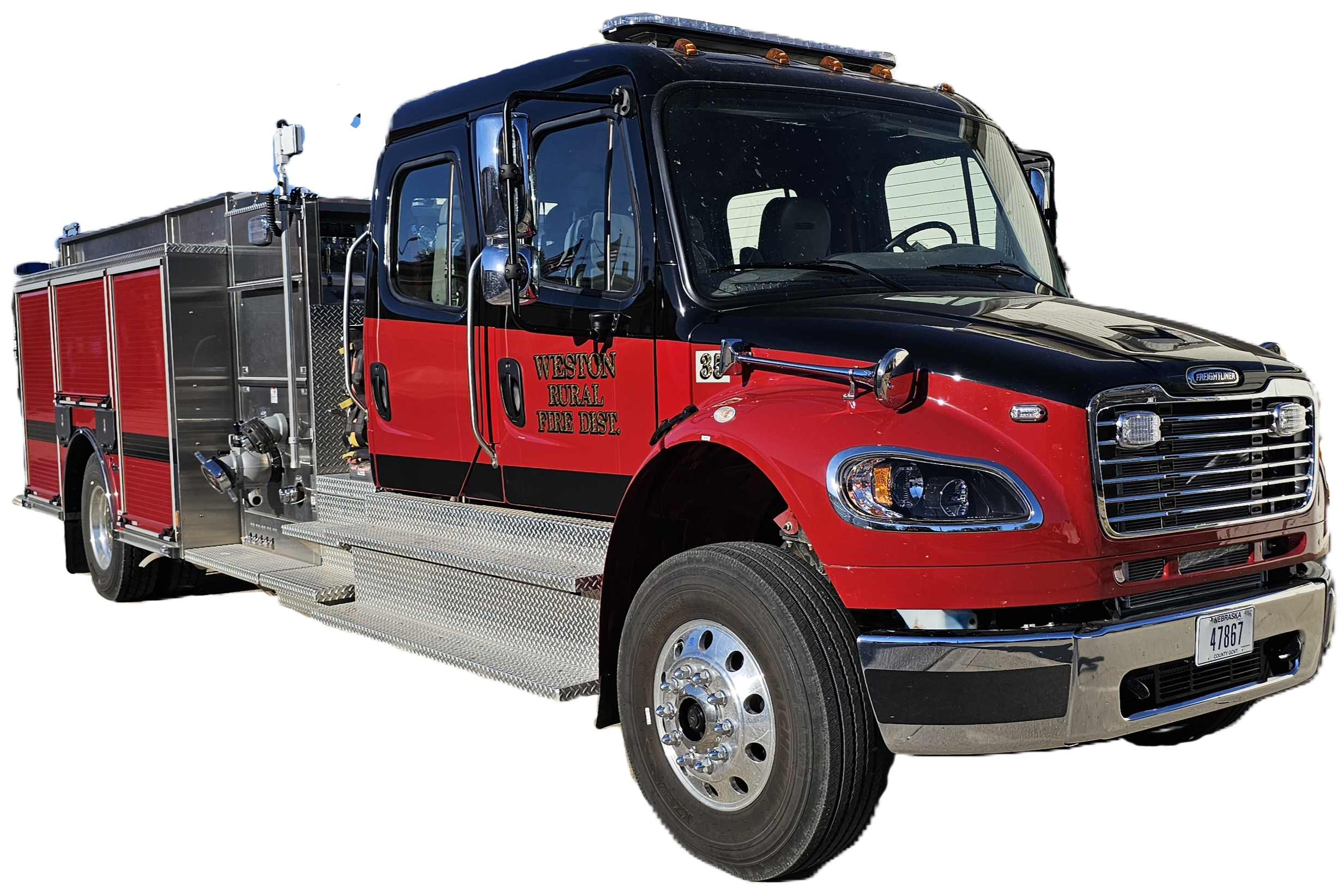
Unit 835 is a fire engine (pumper) that helps deliver water to firefighters while they are putting out a fire. Its main job is to move water from a hydrant or tanker truck to the hoses firefighters are using on scene.
Once positioned, Unit 835 stays in place and pumps water continuously during firefighting operations. While it carries some water onboard, it relies on a steady outside water source to support larger or longer-lasting fires. This engine plays a key role in safely and effectively fighting structure fires.
-
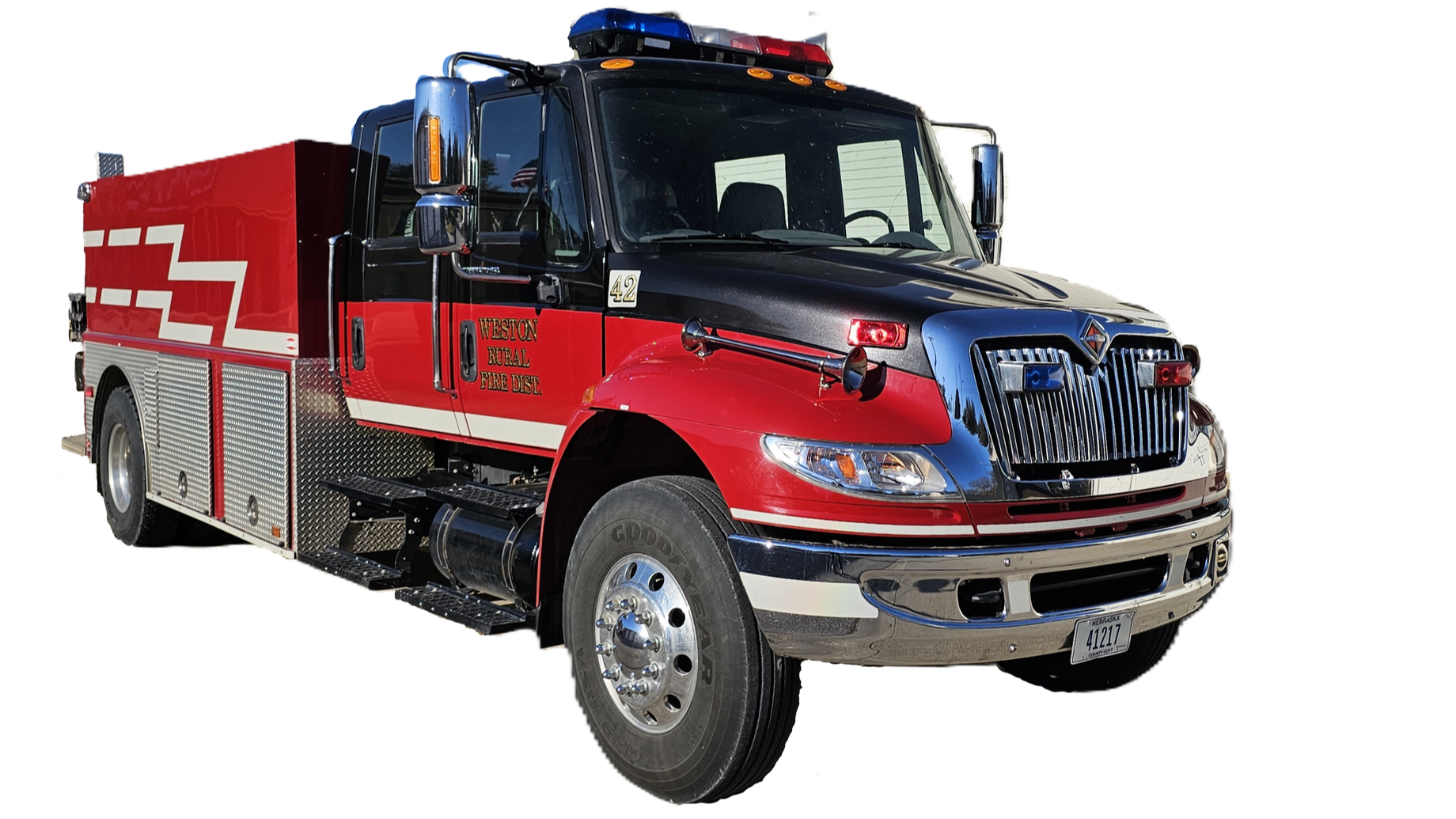
This fire tender or tanker’s primary job is to deliver large amounts of water to fire scenes where hydrants are limited or unavailable. It transports water and supplies it to fire engines or temporary dump tanks to support firefighting operations.
The tanker carries a 1,500-gallon portable dump tank and a portable floating pump, allowing crews to quickly establish a reliable water source in rural areas. While its main role is water supply, it can also be used for structure protection, grass fires, and cleanup operations when needed. This apparatus plays a critical role in supporting fires in rural areas and supplementing water supply during city fires with limited water access.
-
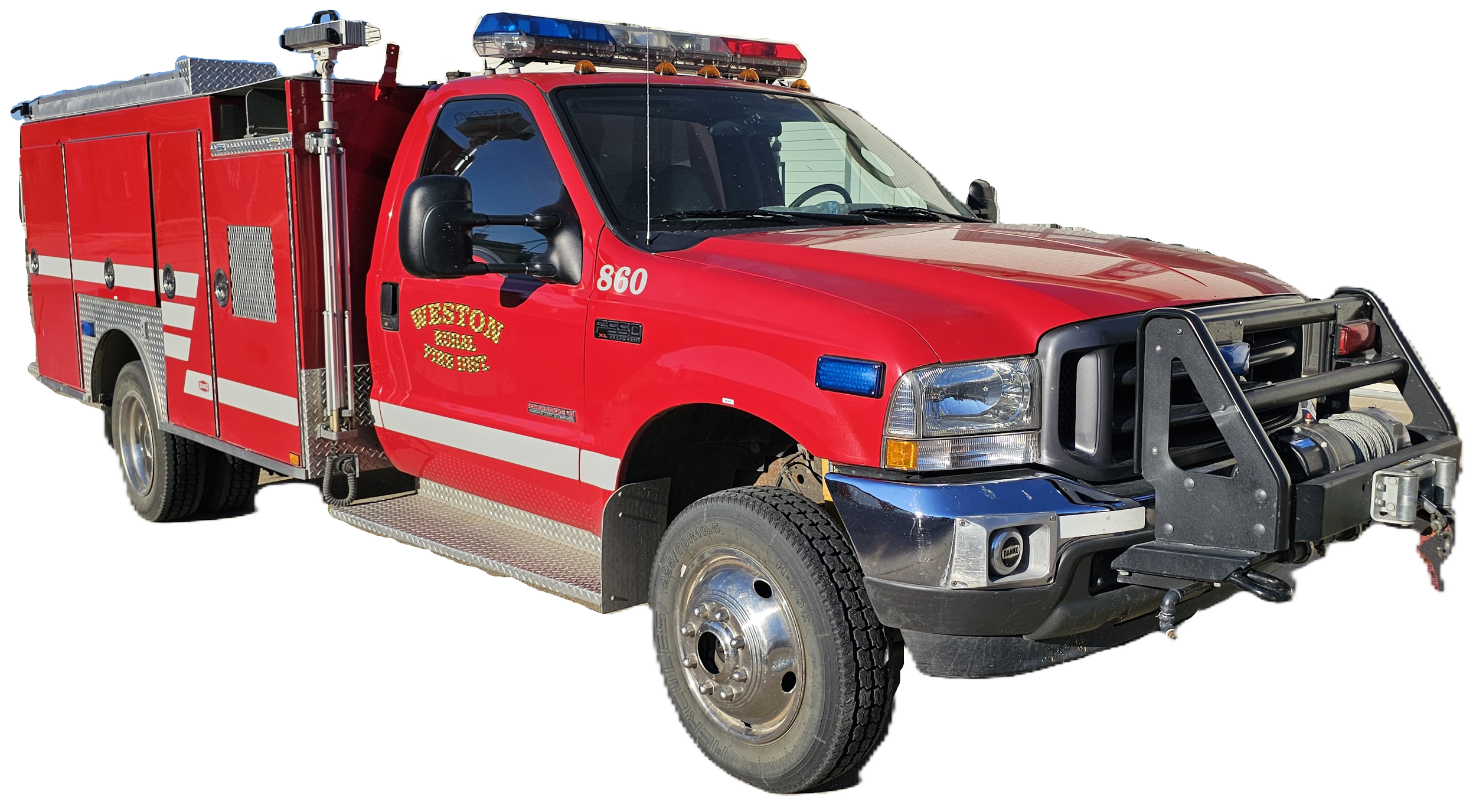
Unit 860 is a smaller fire engine designed for quick response. Its size allows firefighters to arrive faster and begin emergency operations while larger trucks are still en route or setting up.
This unit can start fire suppression on structure, vehicle, and vegetation fires, helping gain early control of the scene. Unit 860 is also used for medical emergencies and carries equipment to assist with vehicle accidents and extrication. Its versatility and speed make it an important first-response vehicle for many types of calls.